
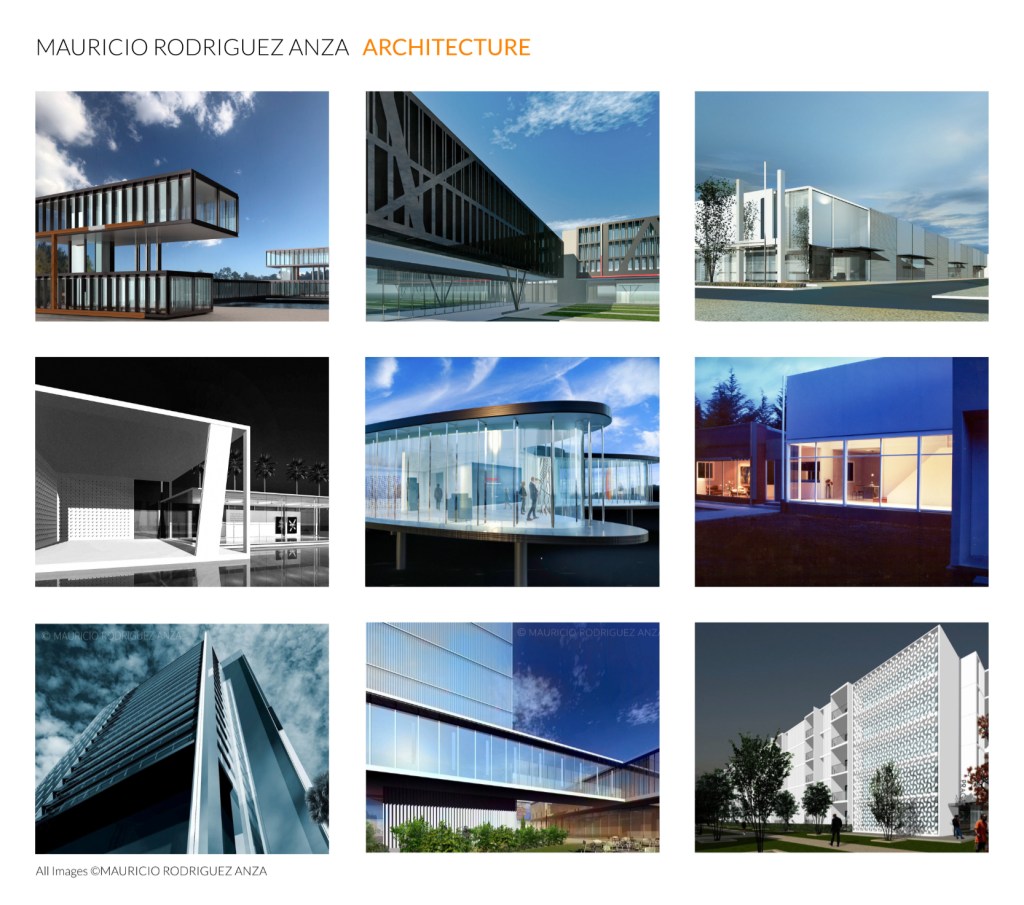
WORKS (BY TYPOLOGY)
HOUSES AND DWELLINGS: Conjunto Olivo (Passive-solar development, 4 houses), 1979-82; Simon House, 1990-92; Vistahermosa House, 1991; Taine House, 1993; Herradura Houses 1 & 2, 1993; Casa Jajalpa, 1996; BRAVA Catalog (5 spec houses), 2003-2004; Las Palmeras Residencial (Bosque Real), 2004; Condominium Tower in Houston (30-story), 2008; Praga Apartments (Houston), 2011-2014.
EXHIBITIONS SPACES: Spazi (Mexico City), 1983; Domo (Houston, TX), 1985.
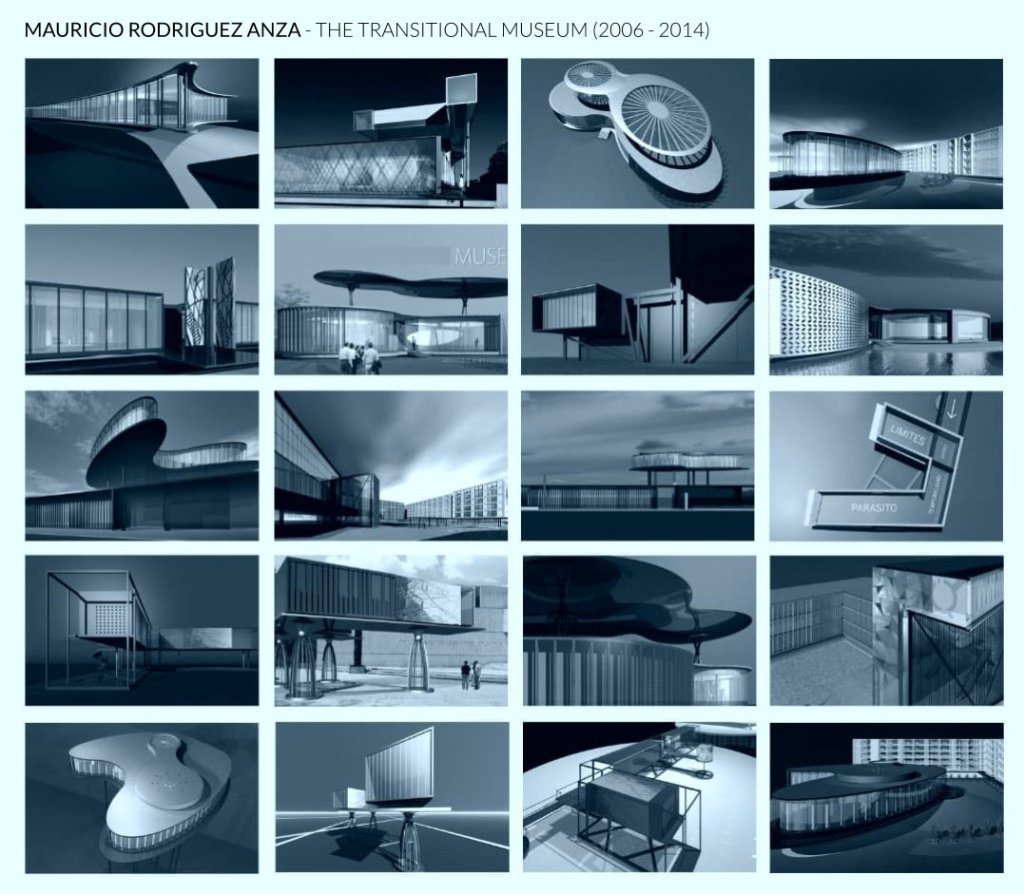
MUSEUMS: Carrillo Gil Expansion Building (commissioned project), 1996; Design Museum Houston (5 typologies, CBD, Midtown and EADO Houston), 2009-2014.
MASTERPLANS: Viap Center Miami, 2001-2003. Brava, a 130-acre residential development in Missouri City TX, 2001-2005; The BK phase 1-5 (Office-warehouse), Austin, Dallas, Houston. 2004-2006; Cancun light rail & train stations (Maya Direct). Light rail station and substations. A proposed project for Cancun, Ciudad Morelos and Playa del Carmen., 2009; Centro de la Diversidad Biológica (Chapultepec 3ª sección), 2015.
INTERNATIONAL COMPETITIONS: Uni Dufour, Switzerland (finalist), 1993; Tourist Information Pavilion Greek Olympiad (finalist), 2002.
MIXED-PROJECTS: Lomas de Margarita (Venezuela), 2009; Blue Square Plaza Houston, Hotel, Mixed Project. (Midtown and EADO Houston), 2009-2014.
HOTELS: Midtown Hotels 1 & 2 (unbuilt), 2010-11.
OTHER: Navigation Studios (Houston), 2013; Artist Studio in Magnolia TX, 2013.
Mauricio Rodriguez Anza has developed different studies on architecture which include Reconfiguracion y el Espacio Alterno, 1996; Thresholds, 2001; The Transitional Museum, 2009 and Frantic, 2015. Part of his architectural research focuses on implementing the versatility and the revitalization of old and middle-aged buildings. These series of independent studies, which began in 1997 also include the creation of an architectural method for the design of horizontal buildings based on the use of an open program; for this, he created a specific model originally made public in his exhibition “Summons”, Mexico City, 1998.
THE TRANSITIONAL MUSEUM became one of the central subjects for Mauricio Rodriguez Anza when co-creating DMH (Design Museum Houston). The museum plan was originally conceived on the use of a permanent and a temporary building, one that could be installed in temporary locations. For this purpose, Rodríguez Anza designed ten different versions based on his theoretical studies.
 MAURICIO RODRIGUEZ ANZA